top of page
See for Yourself:
Candidate Filing List: Oklahoma State Election Board
Voter Info & Registration Records: Oklahoma State Election Board
Candidates filing to run for political office in the state must do so at the Oklahoma State Election Board in Oklahoma City. The election board then releases all of the candidates' names, political parties and home addresses.
Citizens can request Voter Information and Registration records from the state election board. Download the information packet to learn the necessary steps to get these records.
Two incumbents and two empty seats.
Who will represent Payne County?
Education is a common priority among the eight candidates running to represent Payne County in the Oklahoma State Legislature.
With a $1.3 billion state budget deficit, spending cuts appear to be imminent across the board, including for education funding.
State Superintendent Joy Hofmeister released a statement in March saying the education budget cuts are “brutal.”
“A second General Revenue failure
means schools will have lost nearly
$110 million since the start of the spring
semester alone, and that does not take into
account next fiscal year, which looks equally
bleak,” Hofmeister said.
Many of the candidates running for Payne
County said they hope to increase funding
for education despite the budget shortfall.
Each of the county’s three
representative offices and its lone Senate
seat are up for re-election. The primary
election is June 28. Voters will cast their
final ballots for state legislators in the
general election on Nov. 8.
Payne County has one senator, whose district covers
the entire county. The Oklahoma House of Representatives drew three districts – 33, 34 and 35 – to cover parts of the county. Each district elects one representative.
Payne County’s current senator, Jim Halligan, will retire this year at the end of his eighth term. New contenders are campaigning for Halligan’s seat in the upcoming election.
Two candidates, Republicans Tom Dugger and Miguel Najera, are running for the opening in the State Senate. Democrat Dakota Ballard and Independent Quinn Baldwin filed to run for the district 21 seat, but both said they have dropped out of the race.
Speaker Pro-Tempore Lee Denney will vacate her seat in the Oklahoma House of Representatives with her 12-year term limit coming to an end.
Democrat Caryl Talley, Republicans Greg Babinec and Connie Parker and Libertarian Erin Adams are running for the open district 33 seat.
Rep. Cory Williams and Rep. Dennis Casey are running unopposed for re-election in their districts. Williams represents District 34, and Casey is from District 35.
Each candidate has a profile below.
Candidates for the State Senate – District 21
Tom Dugger, Republican:
Dugger, 67, is the owner of a Stillwater accounting firm and a former member of the Stillwater City Council. He graduated from Oklahoma State University with a degree in accounting.
Dugger said education is the biggest single issue of his campaign. It’s “in the very fabric” of he and his wife Ann’s life, he said. Ann taught for 34 years before becoming an adjunct professor in OSU’s College of Education.
With the budget shortfall, this is not the year to increase funding for education, Dugger said. Spending cuts are unavoidable.
Over time, though, Dugger said he would like to increase the amount of state money going to public schools and universities. He did not provide specifics for alternate sources of state revenue or reappropriation of budget funds.
Instead, Dugger said he would rather look at expenditures to see what the state could accomplish with less money. Taxing should come after reviewing expenditures, he said.
“In other words, you squeeze it as tight as possible to be able to use as much money for progress as you can out of what exists currently,” Dugger said.
Rep. Cory Williams said cutting back is not the best plan of action in a budget crisis. State-funded services such as the Oklahoma Department of Public Safety cannot function as quickly or effectively with a smaller budget.
“I can tell you that cutbacks have led to reductions of service,” Williams said. “At some point you get what you pay for.”
Dugger said education is important to the economic growth of the state. People who complete higher education earn higher salaries, which contributes to the state’s tax base.
“Higher education will generate $4.72 for every dollar put into it,” Dugger said. “That’s about the best return on an investment that you can find anywhere, anyplace at anytime.”
Miguel Najera, Republican:
Najera, 27, has been a member of the Stillwater City Council since April 2014. He is an Oklahoma State University graduate with a bachelor’s degree in political science.
Education will be Najera’s first point of emphasis if elected to office, he said. Voicing teachers’ and school administrators’ needs at the State Capitol is key, along with finding the appropriate funding for public schools and universities.
Najera said he plans to accomplish the first goal by keeping open communication with teachers and administrators. He said he intends to set up a monthly meeting with each superintendent in District 21 when the State Legislature is out of session.
Najera said he also wants to visit schools and sit in on classes once every other month when the Legislature is not in session.
Each school has different needs, so there is no definitive price for “appropriate funding” for education, he said. Regardless, he said the state should spend more on schools.
Najera suggested alternative sources of revenue such as reducing tax credits on wind energy. He also recommended reappropriating funds to education, although he did not specify which funds to move. Spending cuts could be another option, he said.
Najera said youth gives him and his wife, Lauren, a unique perspective of education.
“We’re younger, so we’re going to have kids in the education system when we have children, and so for me it has to be a priority,” Najera said. “We don’t have any other option but to care, and we have no other option but to ensure that the future is bright.”
Najera said he also would like to improve the state’s treatment of mental health issues. He plans to examine possible funding reallocation to go toward mental health treatment and open up a dialogue on ways to improve care, he said.
Candidates for the State House of Representatives – District 33
Caryl Talley, Democrat:
Talley, 49, is the director of special services for Stillwater Public Schools’ special education. She is the wife of John Talley, director of the local Fellowship of Christian Athletes chapter.
She is the only Democrat running to represent District 33.
Talley has not responded to multiple emails or phone calls for a comment for this story.
Greg Babinec (Republican):
Babinec, 53, is a McDonald’s restaurant owner from Cushing.
If elected, he said he plans to work on lightening the burden of state regulations on small business owners, increasing teacher pay and improving infrastructure in rural areas of Payne County.
Babinec said he is creating a group called the Teachers Advisory Board. Don Amon, a teacher at Cushing High School, will be the chairman of the board and local teachers will sit on the board, he said.
Babinec said he would discuss legislation regarding education with the board to decide how to vote during the legislative session.
“I want teachers on that committee so that when legislation comes up relative to teaching I can put that group together and say, ‘Hey guys here’s the bill. Do you want me to vote yes, or do you want me to vote no?’” Babinec said.
Connie Parker (Republican):
Parker, 51, is an AP history teacher at Stillwater High School and an OSU journalism graduate.
Parker said running for political office has been on her mind for years. Denney’s exit from the State House this year was the right time to finally run, she said.
Parker said she intends to focus on education, farmers’ rights, and improving mental health care, if elected to office.
Improving education would help attract businesses to the state, she said. Business-owners look for good school systems for their children to attend before moving their families to a new state.
The state should spend more on education, Parker said. She said she is not in favor of raising taxes to do it, though.
More companies coming to Oklahoma means there would be more corporations and salaries to tax. Instead of raising taxes, Parker said she would rather grow the tax base itself.
Parker suggested that the Oklahoma Tourism Department could approach out-of-state businesses and let them know they are welcome to come to Oklahoma. There have been issues in other states where communities aren’t always welcoming to new businesses, she said.
“Just knock on those businesses doors and say, ‘Hey, look, we would love to have you in our state,’” Parker said. “You have to go out and actively recruit.”
More mental health facilities should open in Oklahoma, she said. Private mental health facilities will add to the tax base and provide assistance for those who need treatment.
“We’ve got to take care of those that need mental health care,” Parker said. “Oklahoma has a great opportunity to serve those that need help with mental illness.”
Erin Adams (Libertarian):
Adams, 42, is an Army veteran and a hotel and restaurant hospitality worker from Glencoe.
As a Libertarian, Adams said she focuses on reclaiming personal liberties. She said she is economically conservative but liberal on social issues.
For example, she said she supports a woman’s choice to have an abortion and the decriminalization of marijuana.
However, Adams said she is in favor of reducing state taxes dramatically. Oklahoma should abolish its income tax to encourage consumer spending, she said. It also should eliminate its sales tax on grocery items for at-home consumption and instead consider them necessary, non-taxable goods.
Regarding education, Adams said the number of school superintendents in Oklahoma is “astronomical.” Every small, rural district doesn’t need its own superintendent, she said.
“It doesn’t make good fiscal sense,” Adams said. “There’s no reason we can’t consolidate some services while letting the districts maintain some independence.”
Adams said she would like to propose changes to student examinations, too. Students have to take End of Instruction tests, which are used to evaluate teachers.
These tests count for nothing for students after high school, she said. Using the ACT and SAT exams to evaluate teaching will be more helpful to students as they prepare for college.
Adams said she hopes several Libertarians are elected to the State Legislature this year. They will be able to work together to bring change in state policies by writing and sponsoring legislation, she said.
State House – District 34
Cory Williams (Democrat):
Williams, 38, is an incumbent representative running unopposed for the Oklahoma State House. He is an OSU graduate and a Stillwater attorney operating his own law firm.
He was first elected to the State House in 2009. His term limit will end in 2020.
Williams said he wants to focus on criminal justice reform in his next term. Changing sentencing policies would be a step forward, he said.
Many judges believe sentencing is often too harsh, especially with minimum penalty requirements for people convicted of crimes, Williams said. Even the minimum possible sentence can be too great to fit the crime.
“Just because somebody’s guilty doesn’t necessarily mean that that jury or that judge believes that they’re a threat to society or should be warehoused for a long period of time,” Williams said. “Sometimes our sentences are so draconian that the jury won’t convict because the punishment is too severe.”
Part of necessary reform is to reduce sentencing minimums to give judges more options when deciding someone’s penalty for an offense, Williams said. Another option is moving a felony down to a misdemeanor offense.
An important facet to criminal justice reform is encouraging community sentencing, he said. This way people can get vocational therapy, behavioral therapy and addiction counseling instead of jail time.
Williams also commented on the helping the state’s budget deficit. Oklahoma’s Gross Production Tax on oil and natural gas companies is far too low, he said.
“Whenever Texas’ Gross Production Tax is 8 percent, the Dakotas’ is 12 and 13 (percent) and ours is 2 (percent), that’s a joke,” Williams said. “We’re giving away a resource that we’re never going to get back.”
State House – District 35
Dennis Casey (Republican):
Casey, 55, is an incumbent representative in the State House. Like Williams, he is running uncontested to reclaim his seat.
He was elected as the District 35 representative in 2011. His term limit will end in 2022.
Casey worked in education for 29 years as a teacher, coach, principal and superintendent. He said he plans to focus on securing funds for core state services such as education in his next term.
Some conservatives might prefer a smaller government with less spending, but Casey said the state government couldn’t get any smaller. Over the last seven or eight years, legislators have cut government spending from 10 to 40 percent, depending on the agency, he said.
“We’re at a point where, if you cut them now, they won’t even bleed because you’re at the bone,” Casey said. “With a group effort, we have to make a determination for reform. Some people will call that tax increase.”
Any way of adding revenue for the state is on the table, Casey said. The tricky part is getting everyone in the State House and Senate to agree on a solution.
Casey said he would consider reducing sales taxes on groceries, some of which to be deemed necessities, and adding sales taxes to services. Legislators could also think about eliminating some tax credits, he said.
Casey said if he could go back and do anything differently from his time in office, he would go back on passing the 2016 budget.
Passing a budget is like planting a garden, Casey said. If you plant radishes, you can get plenty of produce, but the success won’t last long. An apple tree, though, will produce for years to come.
“Since I’ve been (in the House) we had shortfalls sometimes,” Casey said. “That’s what we do is we plant radishes or we plant lettuce or something. They pop up. You’re able to get it, but it’s gone as quick as it came. But an apple tree is going to be there a long time.
Payne County Candidates - Nuria Martinez-Keel
00:00 / 00:00
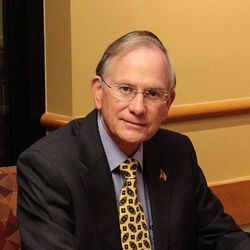 Tom Dugger, R, is running for State Senate District 21. (00:00-00:28) |  Miguel Najera, R, is running for State Senate District 21. (00:29-1:32) |
|---|---|
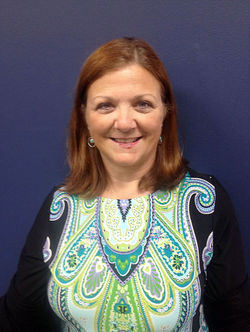 Caryl Talley, D, is running for the State House District 33. |  Greg Babinec, R, is running for State House District 33. (1:33-2:08) |
 Connie Parker, R, is running for State House District 33. (2:09-3:05) |  Erin Adams, L, is running for State House District 33. (3:06-4:18) |
 Cory Williams, D, is running unopposed for State House District 34. (4:19-6:17) |  Dennis Casey, R, is running unopposed for State House District 35. (6:18-7:19) |
bottom of page